Differentiation Strategy: Reasons You Win That Survive a Buyer Pushing Back
How to build a differentiation strategy from your deals: the push-back test, why "great service" fails it, and examples of reasons a buyer can check.
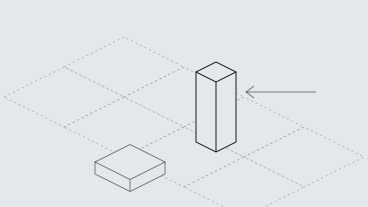
A differentiation strategy is the short list of reasons buyers pick you over what they'd otherwise do. At a company your size, it's three or four reasons a buyer can check, found in the deals you've won and tested on the ones you lost. And "great service" never makes the list.
Ask why a company wins and I'll bet you hear "great service," "we really care," "our people." I've heard some version of them in every company I've worked for, including the ones that were losing. None of them survives a buyer saying "so does everyone else."
Why you win is the third of the three decisions in market positioning, and it comes last for a reason: you can't say why you win until you know who you're for and what you're up against.
What Is a Differentiation Strategy?
A differentiation strategy is how a business differentiates its product or service from its competitors and the other alternatives, so the right buyers choose it and often pay more for it. In the textbook, it's one of Porter's three generic strategies, beside cost leadership (win on a lower price) and focus (win in a narrow market segment, which gives you focused differentiation). That framing was built for companies picking how to compete across a whole industry. In my experience, focused differentiation is where most companies your size end up.
At $1M to $15M, I'd want three or four reasons a rep can say on a call, strong enough to move a buyer who'd otherwise stay put. So I'd define an effective differentiation strategy by one test: a buyer pushes back, and the reason still stands.
The Types of Differentiation, and Why the Type Isn't Your Problem
- Product differentiation: the product does something others don't, or does it better. Vertical and horizontal differentiation are the two kinds of product differentiation: better on a measure every buyer agrees on, or different in a way some buyers prefer.
- Service differentiation: how you deliver, implement or support it, and the customer experience.
- Brand differentiation: what the name stands for in the buyer's head.
- Price: the lower price, which strictly is cost leadership.
- Niche: built for one kind of customer.
The type is rarely the problem. At your size I wouldn't try to outspend a bigger competitor on brand or out-build them on features. You can be the one that's right for a narrow buyer, for a reason that buyer can check. Brand differentiation follows the other two: a brand gets known for a reason, and it can't be bought ahead of one on your budget.
Differentiation vs. Competitive Advantage
A differentiator is a reason a buyer picks you. A competitive advantage is a differentiator the alternatives can't easily copy. The push-back test below tells you which of yours are real.
Why "Great Service" Isn't a Differentiator
Try proving it. How many more support people do you have than the alternative? How much faster do you answer? If you can't say, a buyer can't check it, and in my experience a reason a buyer can't check doesn't move a deal.
There's a second problem. Service is why customers stay, and it builds customer loyalty. It's not usually why they buy. A buyer who doesn't see enough reason to choose you never stays long enough to find out your service is great, so in my experience a strategy built on service ends up aimed at the customers you already have.
The same goes for "easy to use," "innovative," "cutting-edge technology" and "trusted partner." Each might be true. None passes until it's turned into something a buyer can check: easier than what, by how much, and how do you know.
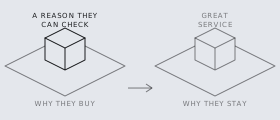
The Push-Back Test for Effective Differentiation
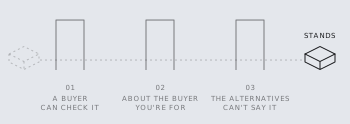
To survive a push-back, a reason needs three things.
- A buyer can check it. A number you can show, a list they can read, a customer they can call.
- It's about the buyer you're for. A reason that matters to everyone is a reason no one picks you for.
- The alternatives can't say it. Not every company in your industry: the alternatives your buyers actually weigh, ranked in your competitive landscape.
Take an invented example, Acme, which sells scheduling software to HVAC contractors whose top alternative is a whiteboard and a spreadsheet. "Easy to use" fails. "Books the next job before the tech leaves the last one, and a dispatcher can watch it happen in the demo" passes: it's checkable, it's about the contractor drowning in dispatch calls, and the whiteboard can't say it.
Notice what the test is measured against. "Easier to use" means easier than the spreadsheet if the spreadsheet is what your buyers do today. Measured against the wrong alternative, I'd expect even a true reason to sound like a boast.
How to Build an Effective Differentiation Strategy From Your Deals
Step 1: Start from who you're for and what they'd do instead. The ideal customer profile guide covers the first and the competitive landscape guide the second. A reason only counts against something.
Step 2: List the differences between you and the top alternatives. Your unique attributes: features, process, terms, people, guarantees. Include the ones that look like negatives: "we only do scheduling" sounds small until a buyer has lived through an all-in-one rollout.
Step 3: Ask two buyers why they picked you. Take the wins you'd want ten more of and ask two of those buyers why they picked you over what they'd otherwise have done. Write down their words.
Step 4: Keep the reasons that come up twice. A reason one buyer gives is an anecdote. A reason two give, unprompted, is a candidate.
Step 5: Attach the proof. Each candidate gets a number you can show, a list a buyer can read, or a customer who'll take the call. A reason without proof goes in the bin.
Step 6: Say what it means for the buyer. Turn each reason into its benefit. For Ledgerline, the invented implementer in the examples below, "live in forty-five days" means the buyer's finance team closes next quarter on the new system, not the one after. That's the line your reps lead with.
Step 7: Test it on a deal you lost. Pick a loss that fit the pattern and ask whether this reason, said clearly, would have changed it. If not, cross it off.
You'll end with three or four. I'd stop at four; a rep can carry that many into a call. Decide them before decisions one and two and you're back to "great service."
Differentiation Strategy Examples
The first two below are invented to show the form; neither is a client.
A services firm. Ledgerline implements ERP systems for finance teams moving off spreadsheets, and its buyers would otherwise hire a large implementer. "Experienced team" fails. "Live in forty-five days because we don't customize, and here are the last ten" passes. The refusal to customize, which a sales team might hide, is the reason.
A negative turned into a reason. A firm that only works with one industry loses the buyers outside it. For the buyers inside it, "we've done this for forty companies exactly like yours, and here are five you can call" is the strongest reason on the list.
Mine. "Experienced fractional CMO" fails the test. Against a network that assigns whoever's on the roster, this passes: I'm one person, with no associates and no bench, so the one who reads your deals is the one who makes the decisions with you. My prices are published. And every engagement is month to month, with no minimum term, so you can stop after any month.
Against a full-time CMO, the search alone takes three to six months before anyone reads a deal.
Does Differentiation Mean Charging Higher Prices?
Not necessarily. The textbook says differentiation lets you charge higher prices. Under $15M it more often stops the buyer comparing you on price at all.
A monthly fee looks expensive next to a free spreadsheet, and small next to what the spreadsheet costs the buyer every week, in their numbers. Your reasons decide which of the two comparisons the buyer makes.
How to Measure Results From Your Differentiation Strategy
I'd watch four things.
- Your win rate against your top alternative holds or rises, doing nothing included.
- Discount requests drop, because buyers stop comparing you on price.
- Reps use the reasons without being told, in their own words, with the proof.
- Buyers say it back to you. When a new customer tells you why they bought and it's one of your reasons, it's working.
Differentiation Strategy Questions, Answered
What Are the Four Types of Differentiation?
The usual four are product, service, brand and price differentiation, though lists vary and some add people, channel or image. I'd care less which type a reason is and more whether it passes the push-back test.
What Is an Example of Successful Product Differentiation?
In B2B, the example I'd point to is specific: software that does one job the buyer's current tool can't, shown in a demo, for the buyers who need that job done. The Acme example above is that kind of product differentiation.
How Do You Keep Your Competitive Edge When Competitors Copy It?
In my experience, competitors copy features faster than they copy a whole way of working. Reasons built on how you deliver (what you refuse to do, who you only work with, what you publish) are a more lasting advantage than features. Rerun the test twice a year and retire the reasons a rival can now say too.
What Is a Sustained Competitive Advantage?
A sustained competitive advantage is a competitive advantage that lasts, because the alternatives can't copy it quickly or cheaply. In my experience, at your size it comes from how you deliver more often than from what you build. A feature holds until the next release; a way of working a rival would have to rebuild itself around holds longer.
How Do You Create Product Differentiation in B2B?
I'd start from the buyer, not the product. Identify the one job your best buyers need done that their current tool or process can't do, and make it something they can see in a demo. That's product differentiation a buyer can check, which I'd take over a longer feature list.
What Is a Differentiation Strategy in Marketing?
In marketing, the differentiation strategy is the input and the messaging is the output. Every page, ad and sales deck should carry the same three or four reasons, in the buyer's words. I'd decide the reasons from the deals before anyone writes a headline. In my experience, when nobody decides them first, "great service" is what comes back.
What Are Vertical, Horizontal and Mixed Differentiation?
Vertical differentiation means being better on something every buyer ranks the same way, like quality or performance. Horizontal differentiation means being different in a way some buyers prefer and others don't. Mixed differentiation is both at once. At your size, I'd start from the horizontal side, because being right for a narrow buyer is easier to prove than being better for everyone.
Is a Differentiation Strategy Right for a Small Business?
I'd argue a small business needs one more than a big one. In my experience, it rarely has the scale to win on price, the budget to win on brand or the market share to look like the safe choice, so it has to compete on reasons a buyer can check. That's focused differentiation: a narrow audience and a reason that audience values.
What Are the Benefits of a Differentiation Strategy?
The textbook benefits are customer loyalty, less price competition and room to charge more. At your size I'd put the second first: buyers who stop comparing you on price. Higher prices can follow, but I wouldn't build the strategy around them.
What Are the Risks of a Differentiation Strategy?
In my experience, there are three: a reason the buyer doesn't value, a reason competitors can copy, and a price gap wider than the difference is worth. The push-back test catches the first. Rerunning it twice a year catches the second, and discount requests tell you about the third.
Who Should Build Your Differentiation Strategy
You. You know what you'd like the reasons to be, which is the problem: the decision is yours, but the reasons have to come from your buyers. Most CEOs who call me have tried this and stopped at the hard part.
A brand agency. It will run a workshop and give you a deck with the reasons named. Naming a reason isn't the same as testing it on a lost deal.
Advisory. $3,000 to $4,000 a month, remote, month to month. I read your deals and tell you which reasons pass the test and which to retire. Your team builds the rest. Nothing reports to me; I answer to you.
Done my way: Fractional CMO. $5,000 to $7,000 a month, remote, month to month, with no minimum term and no notice period. Your marketing team reports to me and I report to you. I talk to the buyers myself, decide the reasons with you, and build the messaging and the prospecting on them, in that order, so the position gets used instead of filed.
Retire "Great Service" This Week
Write down the three reasons your team gives for why you win. Then ask two buyers you'd want ten more of why they picked you, and see how many of your three they say. Once you have the short list, the positioning statement guide shows how to put it in a paragraph your team can say out loud.
The ones they say, with proof, are your differentiation strategy. The ones they don't are what you'd like to be true.
- 2020Fractional CMO & CROAveraged across clients2–6× · pipeline
- 2018Chief Revenue Officer20-year-old company+300% · 2 years
- 2015VP of Sales & MarketingStartup+107% · 2 years
- 2014EVP Sales & MarketingStartup → Unicorn Status+300% · 1 year
- 2006VP Channel & Business DevelopmentStartup → Unicorn Status+600% · 8 years
- 1999Global Sales DirectorPublic Software Company+400% · 7 years
Free: a week of analysis, a one-hour report-out, and an action plan you keep.